
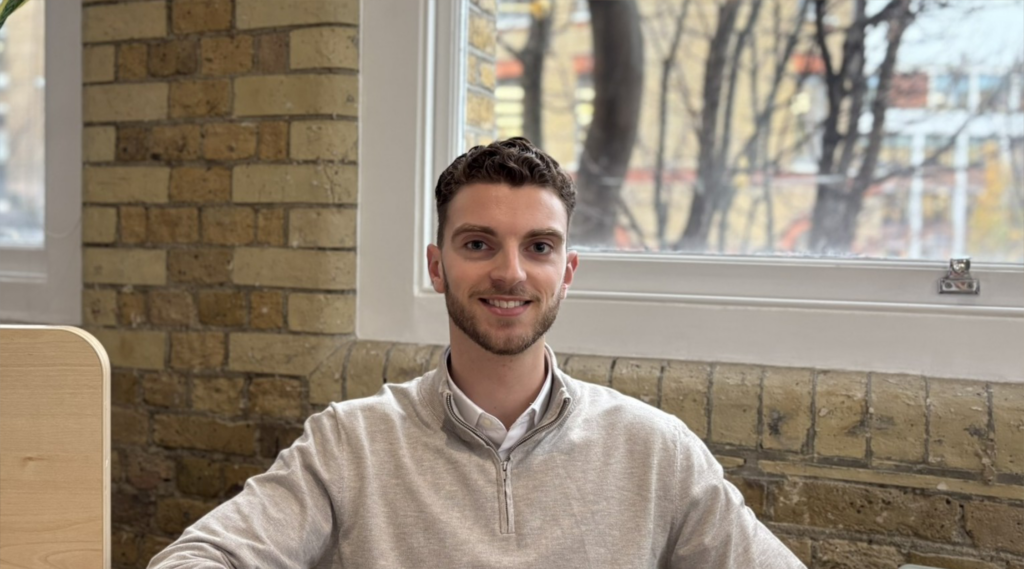
Thomas Dickason joined Wilson Mason in June 2023 as a Year-Out Architectural Assistant and, in 2025, progressed to a Level 7 Master’s Apprenticeship alongside his role in practice.
Now a Part 1 Architectural Assistant with three years of industry experience, Thomas has worked across a range of projects, from healthcare to higher education, while continuing to develop his skills across design, technical work and visualisation.
Here, he reflects on what first attracted him to architecture, the lessons he has learned from colleagues and what it means to be starting his career at a 100-year-old practice.
What first attracted you to architecture?
I have always had a passion for design, from cars and engineering to buildings and the wider built environment.
I was naturally drawn to the way design can combine creativity, functionality and technical problem-solving to create something tangible.
Architecture stood out because it brings all these interests together, allowing me to explore creative ideas while understanding the technical processes required to turn them into reality.
That combination of design, problem-solving and the opportunity to shape the spaces people experience is what first attracted me to architecture and continues to inspire me today.
What does it mean to you to work for a practice with 100 years of history?
It gives me a real sense of pride and responsibility.
As part of our centenary celebrations, I’ve had the opportunity to look through lots of previous projects and learn more about the practice’s history, from work across the Middle East to more recent projects throughout London and the wider UK.
Seeing the breadth and quality of this work has given me a greater appreciation of the practice and its legacy. I’m proud to be part of Wilson Mason today and to help carry that legacy into the next 100 years.
What have you learned from working alongside more experienced architects and colleagues?
Working with experienced colleagues has been one of the most valuable parts of my development at Wilson Mason.
It has given me an insight into project leadership, design development, decision-making and client relationships, while Project Architects have taught me about the day-to-day realities of delivering projects, from coordination to solving design challenges.
Learning from colleagues at different stages of their careers has broadened my understanding of architecture and helped me develop my own approach. Most importantly, I’ve learned that architecture is a collaborative profession and that sharing knowledge is fundamental to continued growth.
Is there a piece of advice or lesson from a senior colleague that has stayed with you?
One piece of advice that has stayed with me came from being on site. I was told there is never a need to answer a question immediately if you are not certain.
Taking the time to go back, check the drawings and information, and return with the correct answer or a considered solution is often the best approach.
It also taught me that it is impossible to remember every detail of every drawing. What matters is knowing where to find the correct information and having the confidence to check rather than guess. It is better to give the right answer than a quick one that may be wrong.
Are there any Wilson Mason projects that have helped you understand the character of the practice?
The first project I worked on when I joined Wilson Mason in 2023 has stayed with me.
It was a large and complex project with an extensive design team, which we developed through to Stage 3+.
I contributed through Revit, producing high-end CGI visuals and helping with the selection of colours, materials and samples.
Seeing all these elements come together within such a large team highlighted the importance of communication, collaboration and attention to detail, and made it a particularly memorable introduction to practice.
What skills have you had to develop fastest since joining the profession?
I’ve had to develop a broad range of skills at a fast pace. Communication and collaboration have been particularly important as I’ve learned how to work effectively within a design team, coordinate information and communicate ideas clearly.
I’ve developed my technical knowledge through detailed drawings and information coordination, while gaining a better understanding of how buildings are constructed and delivered on site.
My digital skills have also progressed significantly through Revit, high-end CGI visuals, reports and presentation material.
Most importantly, I’ve learned how all these skills connect within a real project, giving me a much more rounded understanding of architecture.
What kind of projects do you hope to be working on in 10 or 20 years?
I hope to be working on ambitious and complex projects that have a real impact on the people and communities who use them.
I would like to continue working across a range of sectors, building on my experience in healthcare and higher education while taking on greater responsibility within design teams.
I’m particularly interested in projects where strong design, technical innovation and an understanding of how people experience buildings come together. Ultimately, I want to work on projects I can be proud of, from initial concept through to completion, while continuing to learn and contribute to the future of architecture.
How important are sustainability, social value and community impact in the kind of work you want to do?
These are increasingly important to me as I develop as an architect. I believe good architecture should respond not only to the needs of a client, but also to the wider impact a building has on its users, community and environment.
Working across healthcare and higher education has shown me how strongly architecture can influence people’s everyday lives.
I want to be involved in projects that are designed responsibly, make a positive contribution to their surroundings and create spaces that can be valued for generations.
As I develop, I hope to strengthen my understanding of how sustainable design and social value can be embedded from the earliest stages of a project.
When Wilson Mason reaches 125 years, what do you hope people will say about this chapter of the practice?
I hope people look back on this chapter as a period of continued growth, ambition and positive change, while maintaining the values that have made the practice successful for 100 years.
I also hope the work produced during this time is remembered for its quality, innovation and lasting impact, and that the people who were part of the practice played an important role in shaping its future.
As someone at the beginning of my career, it would be incredibly rewarding to know that I contributed, even in a small way, to the next chapter of Wilson Mason’s story and helped carry its legacy forward for the generations of architects who come after us.
What do you think has been Wilson Mason’s greatest legacy?
Wilson Mason has delivered some fantastic projects across Europe and the Middle East, with a history of genuine innovation and an impressive breadth of work. However, I believe the practice’s greatest legacy is its people.
The ability to maintain a small, tightly knit and collaborative team over 100 years is something particularly special.
The knowledge, experience and relationships built between generations of architects and colleagues have created a strong sense of continuity. This people-focused approach, and the willingness to share knowledge and support one another, has allowed Wilson Mason to evolve while retaining the character that makes the practice unique.
For me, being part of that team and contributing to its next chapter is one of the most rewarding aspects of working at Wilson Mason.