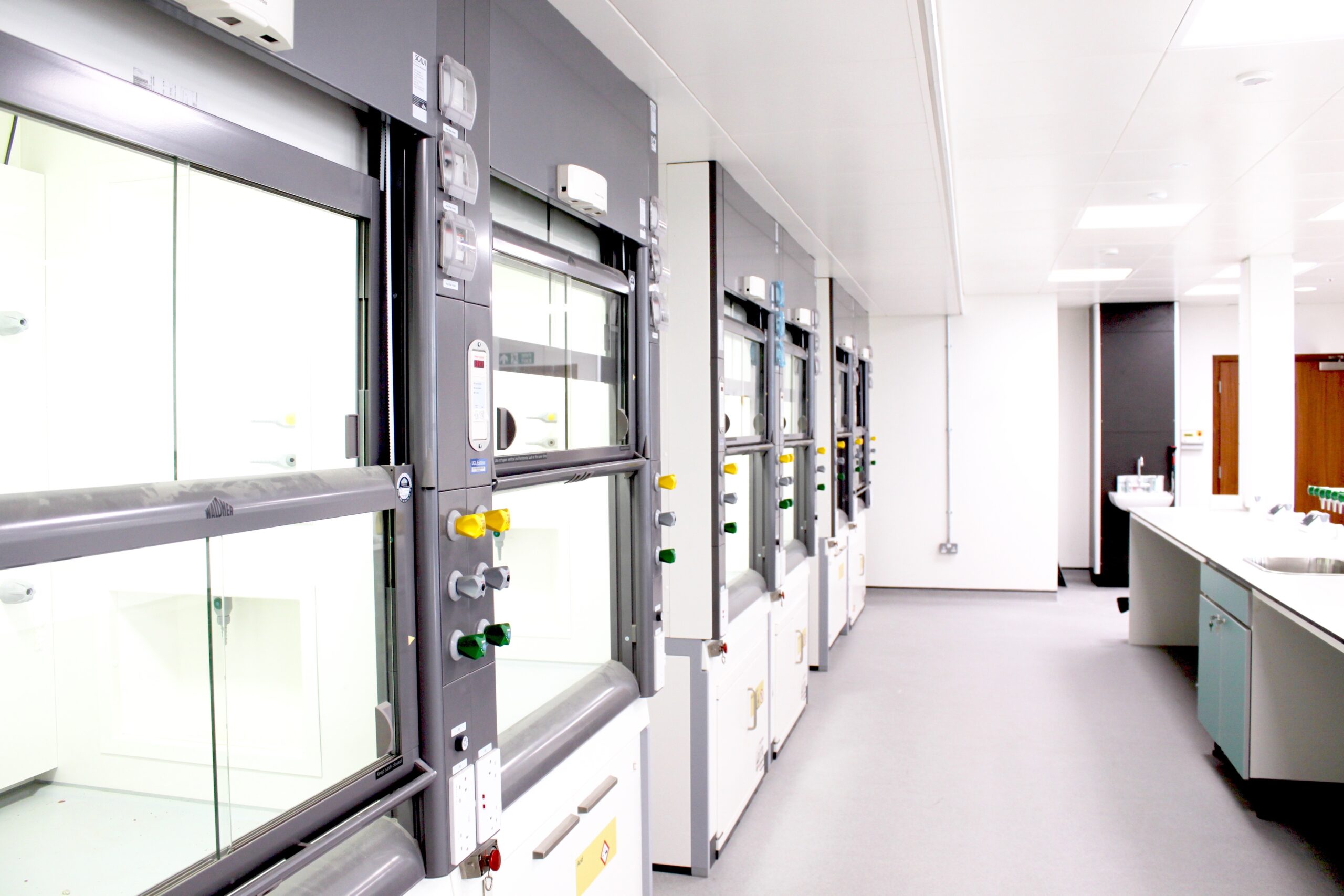
The brief focused on transforming dated laboratory and office spaces into a flexible, high-performance teaching environment. The programme included a 200-capacity teaching facility across two floors, with spaces for laboratory-based instruction, pharmacy dispensing simulation, and flexible consultation training and group learning facilities
Phase 1 involved the creation of a simulation pharmacy and consultation rooms for up to 50 students, enabling role-play teaching with AV integration for observation and review. Phase 2 delivered general instrumentation and chemistry labs, including fume cupboards and containment areas, alongside CAT 2 laboratories and supporting instrument rooms for an additional 150 students.
The project had to be delivered entirely within the university’s summer shutdown periods. Early design investigations revealed the scale of required asbestos removal and infrastructure upgrades, prompting the programme to be split into two summer phases. This ensured uninterrupted teaching and a phased handover strategy.
The third floor, which remained fully operational throughout, housed sensitive research requiring uninterrupted access and services. A bespoke temporary access route was designed and structurally implemented in Phase 1, allowing construction on the second floor during Phase 2 without disrupting research continuity.
Given the proximity to residential buildings and planning restrictions, traditional extract solutions were not viable. We worked with environmental engineers to develop a solution using CDF modelling and low-profile strobic fans with acoustic attenuation. This approach achieved the necessary air quality and performance standards while respecting the visual and acoustic character of the neighbourhood.
Along the atrium-facing access corridor, the team developed a bespoke linear wall manifestation featuring electron microscope imagery, selected with UCL’s research teams. This feature reinforces the building’s scientific identity and highlights its research-driven environment.