At the core of the project was the need to provide a dedicated environment for consultation, demonstration, and engagement with external commercial partners developing cardiovascular therapies. Positioned beside one of Europe’s largest cardiovascular hospitals, the spaces were intended to act as a platform for the development and delivery of new clinical technologies.
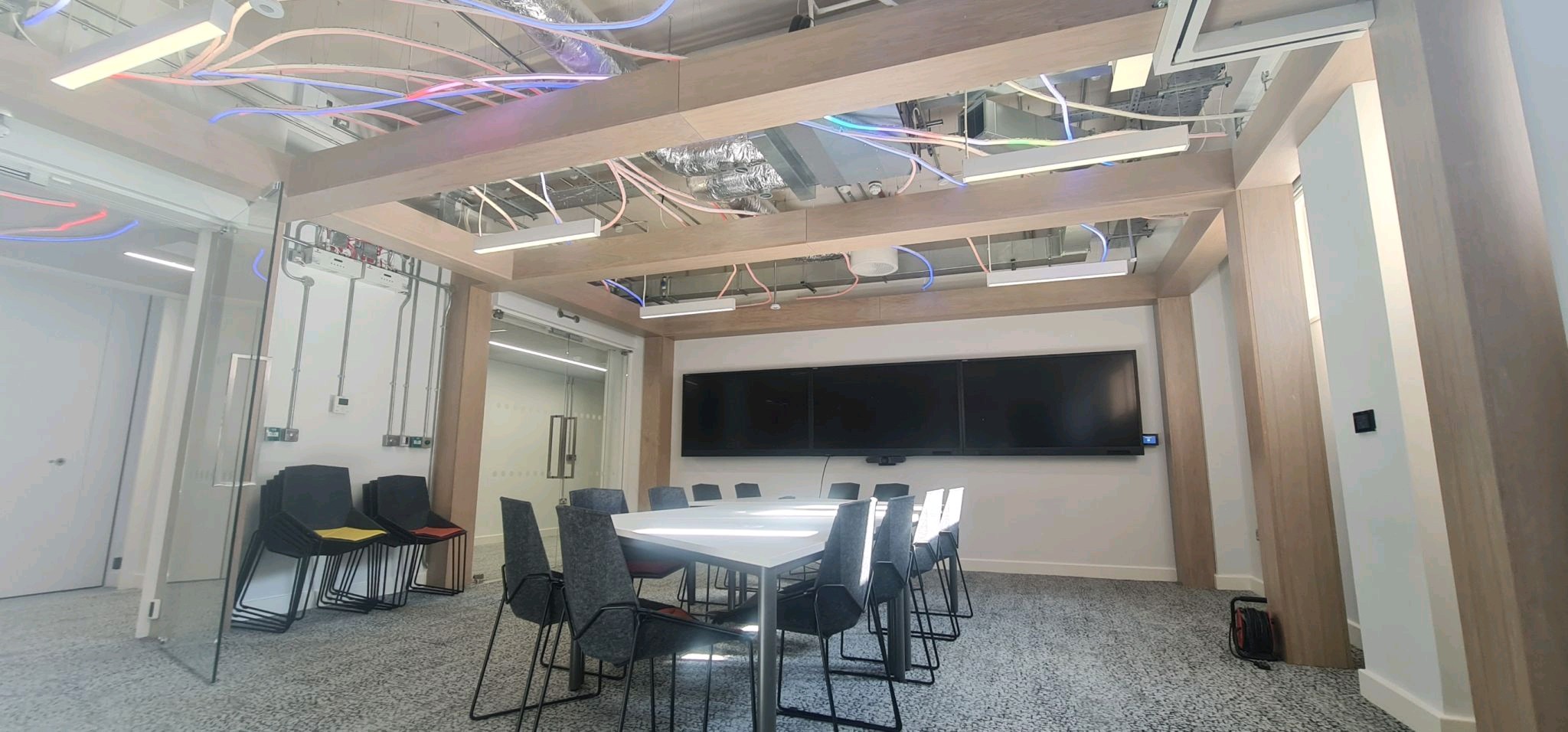
The project required the creation of a bold, contemporary identity that reflected the integration of digital technology and healthcare, while occupying a building of significant heritage value. A new boardroom was located within the older listed accommodation with contemporary panelling and timber floors acknowledging a former original lecture theatre house within the space but long since removed.
Delivered under a JCT IDC 2016 contract, the refurbishment converted existing university offices into a multi‑purpose, interactive environment capable of hosting both public and private events alongside staff workspace. Works also extended into the Grade II listed Robin Brook Centre, where sensitive modernisation was required to restore and upgrade a run‑down area while preserving its historic character.
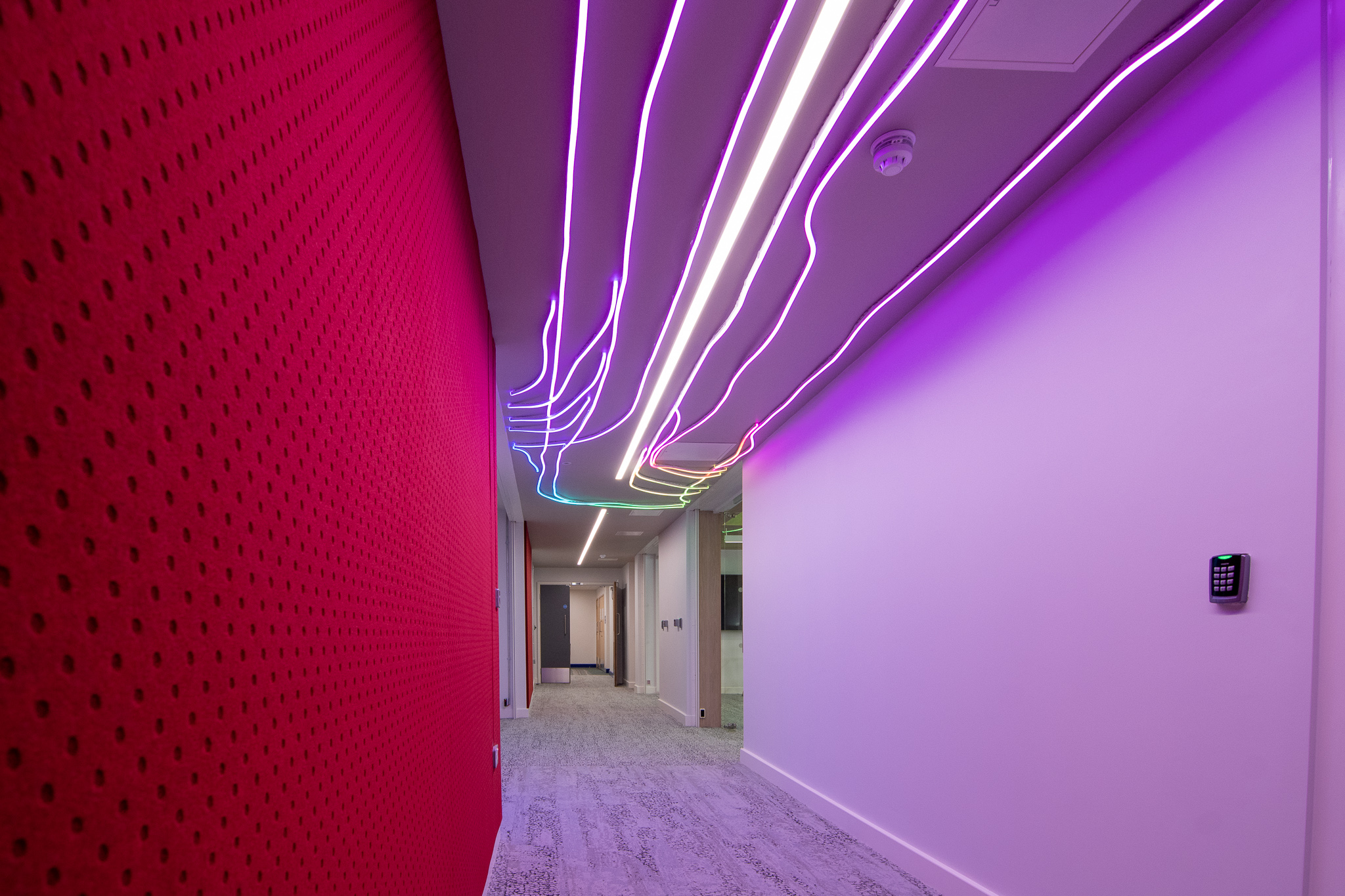
A feature lighting installation in public areas abstracted the branching structure of cardiac vessels, with programmable colours allowing the atmosphere to shift in response to mood and event type.
Working within a live hospital environment, the project brought together a range of functions:
- Spaces supporting overlap between technical device development and clinical application
- Presentation areas for investors, partners, and industry stakeholders
- Integrated workspace, development zones, and flexible presentation suites
- Adaptable partitioning systems enabling varied meeting, seminar, and event formats
- AV integration for demonstrations, product launches, and video conferencing
The scheme required coordinated intervention across multiple floors of two operational university and NHS buildings. Weekly design team sessions were essential in resolving discovery items emerging during strip‑out and maintaining progress against a critical programme.