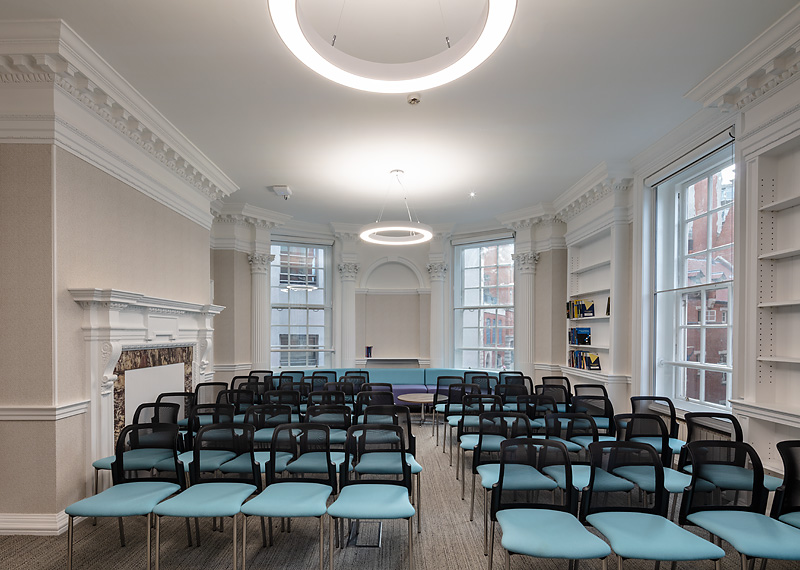
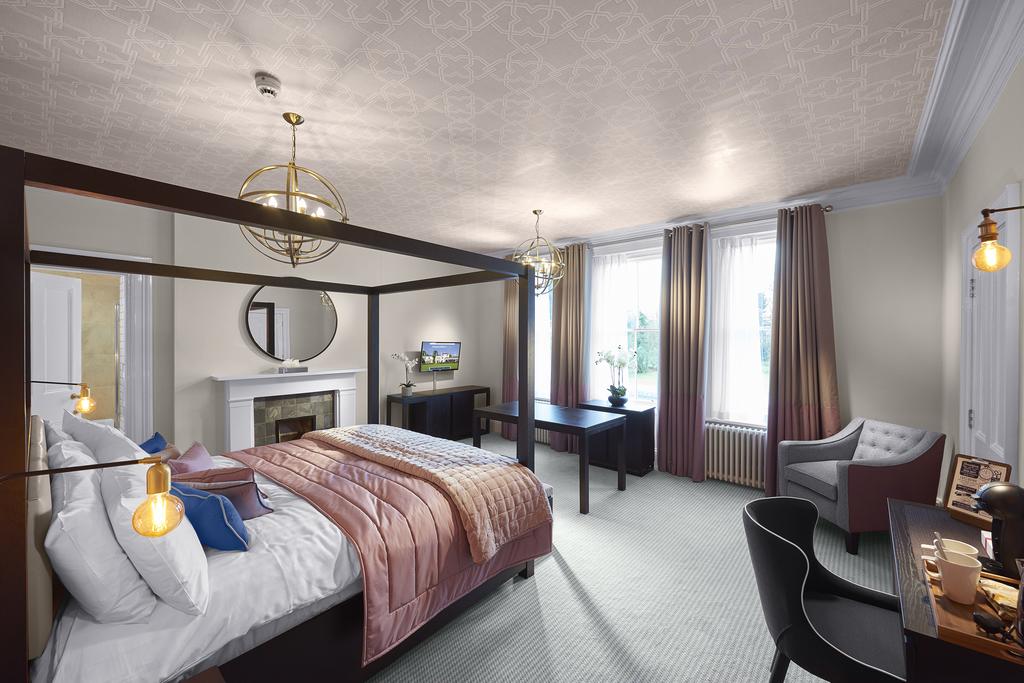
Built in 1903 by Horace Field, the Grade II listed building combines a Queen Anne exterior with retained Edwardian interiors and has seen decades of intensive use. The project offered an opportunity to upgrade power, lighting, WC provision, and general fabric while restacking floors to rationalise room functions and departmental layouts after years of incremental occupation.
As a light‑touch refurbishment with targeted remodelling, the design focused on delivering consistent finishes and layouts across all floors, allowing departments to co‑locate and reallocate spaces without future piecemeal decoration. The client sought a sensitive internal upgrade that respected listed features while modernising circulation, WC facilities, and accessibility in line with long‑term serviceability and facilities standards.
A unified aesthetic was introduced, offering a contemporary interpretation of Edwardian design supported by coherent strategies for accessibility, contrast, and lighting. Lift lobbies were standardised to create calm, legible orientation points throughout.
New common rooms for undergraduate students, postgraduates, and staff replaced informal departmental setups, establishing shared hubs for social learning and collaboration. Alongside the architectural works, the project addressed key infrastructure upgrades, including fire compartmentation, primary services distribution, new mechanical ventilation plant, and new drainage runs ensuring the building can continue to support modern academic and workplace needs.