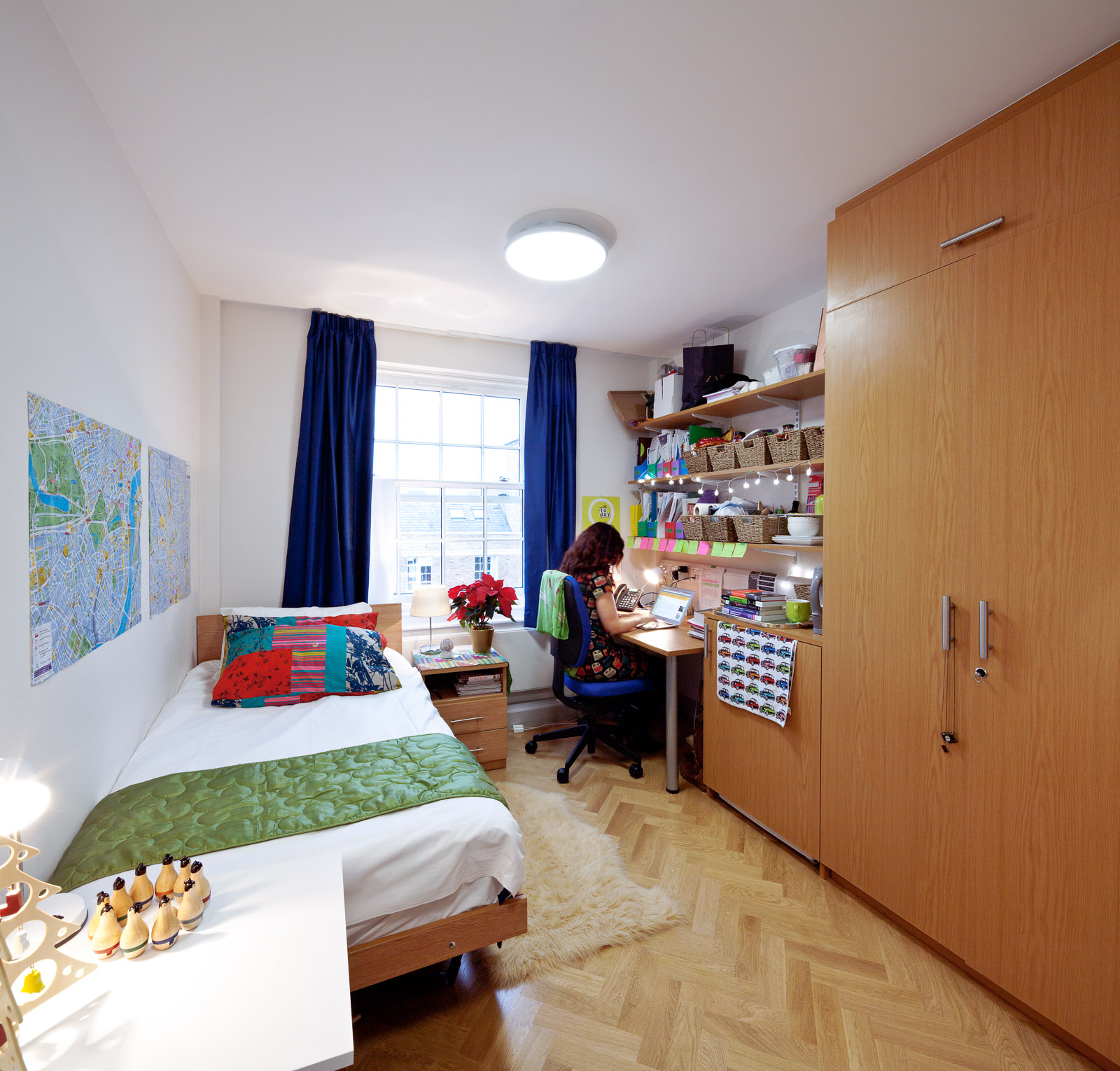
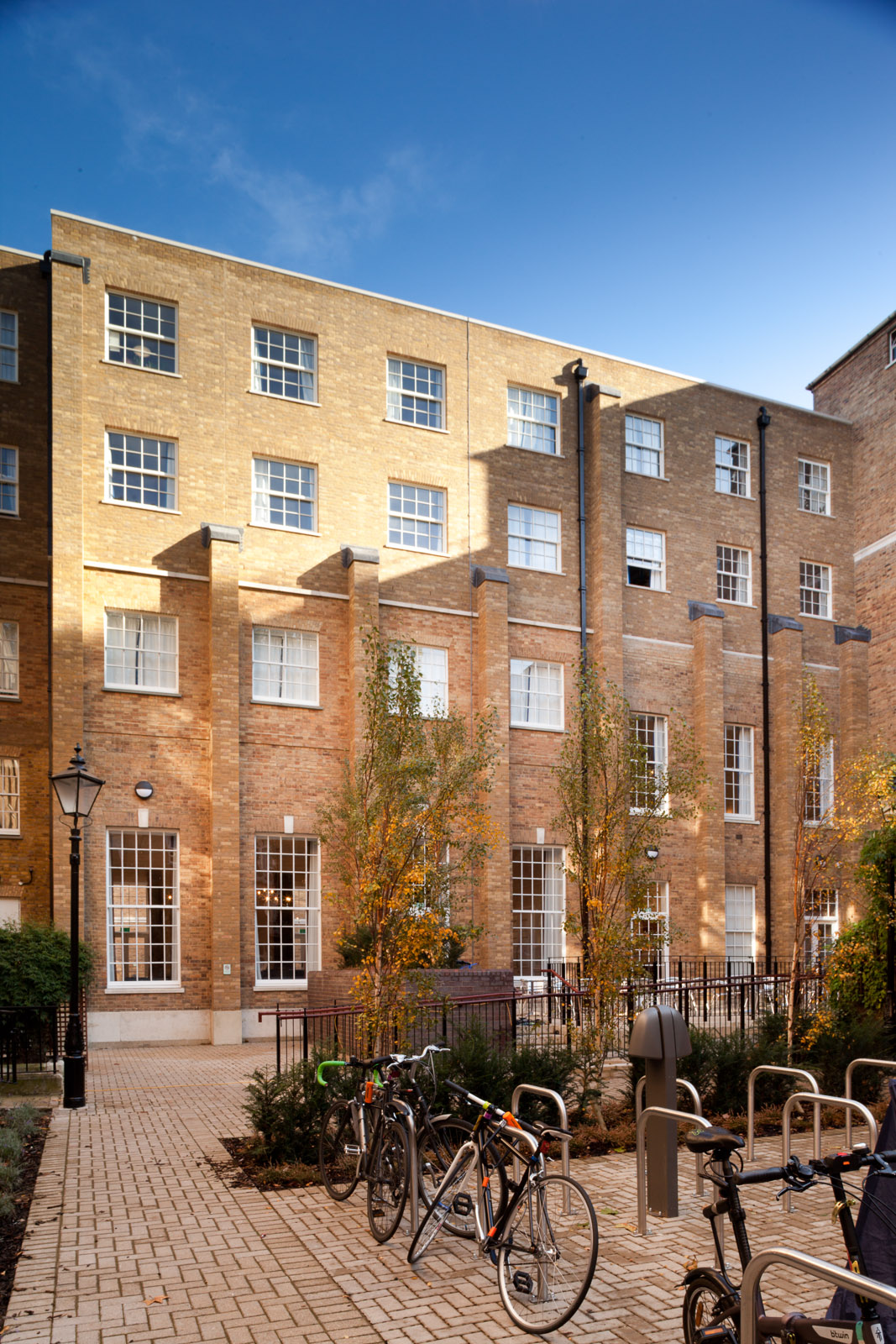
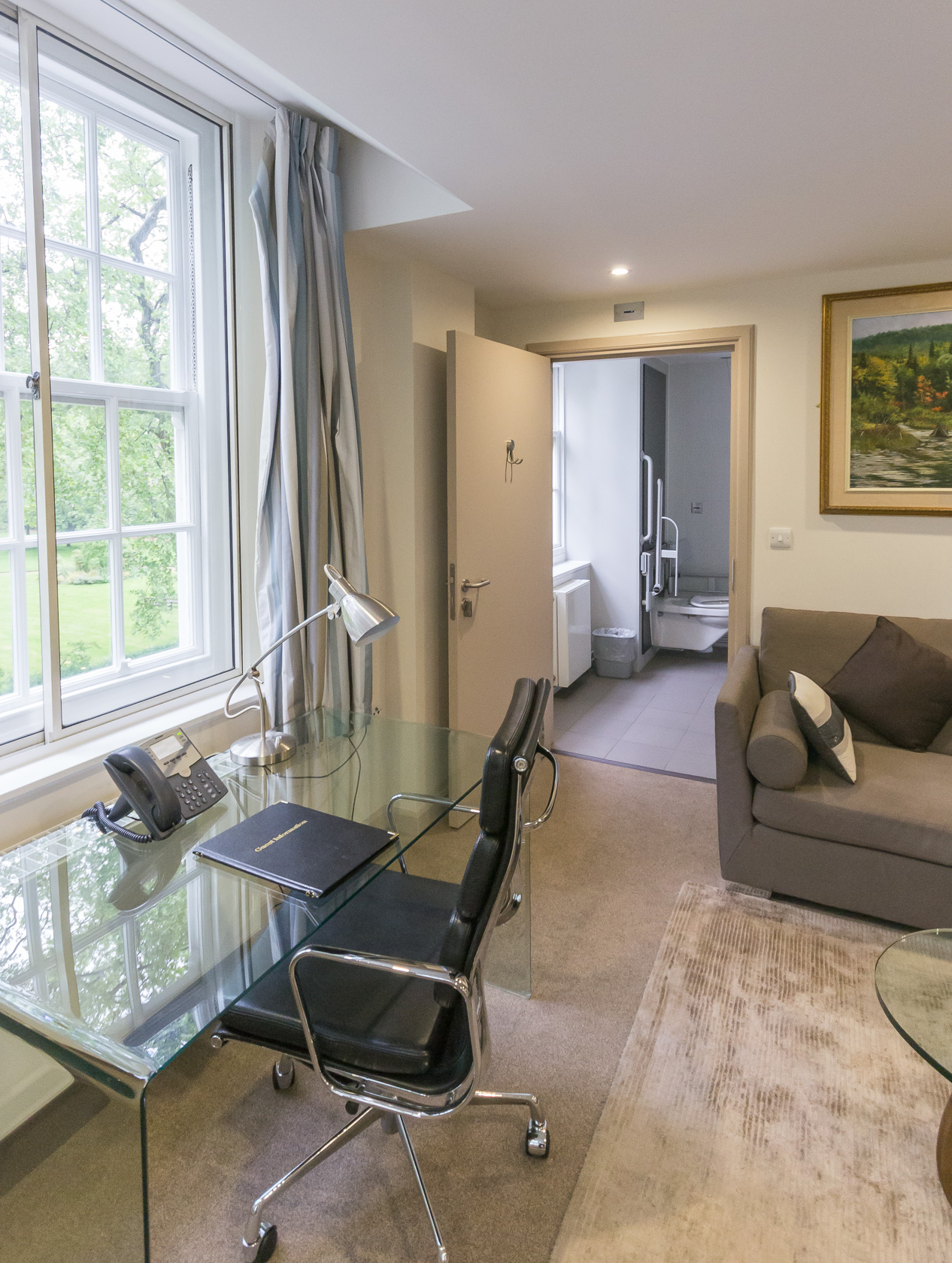
The first phase at William Goodenough House involved an extensive interior refurbishment and a new two-storey extension. The building now provides 290 upgraded study bedrooms, all with en-suite facilities, accessible studios at ground level, and a redesigned reception. The extension added 54 new study bedrooms and two studio flats, linking the east and west wings and improving overall connectivity.
Landscaped courtyards were redesigned to enhance security, access, and ambience. The west courtyard includes a terrace and cycle storage, while the east courtyard features a bespoke water feature and timber-decked terrace for new basement studio flats. The phase achieved a BREEAM ‘Very Good’ rating.
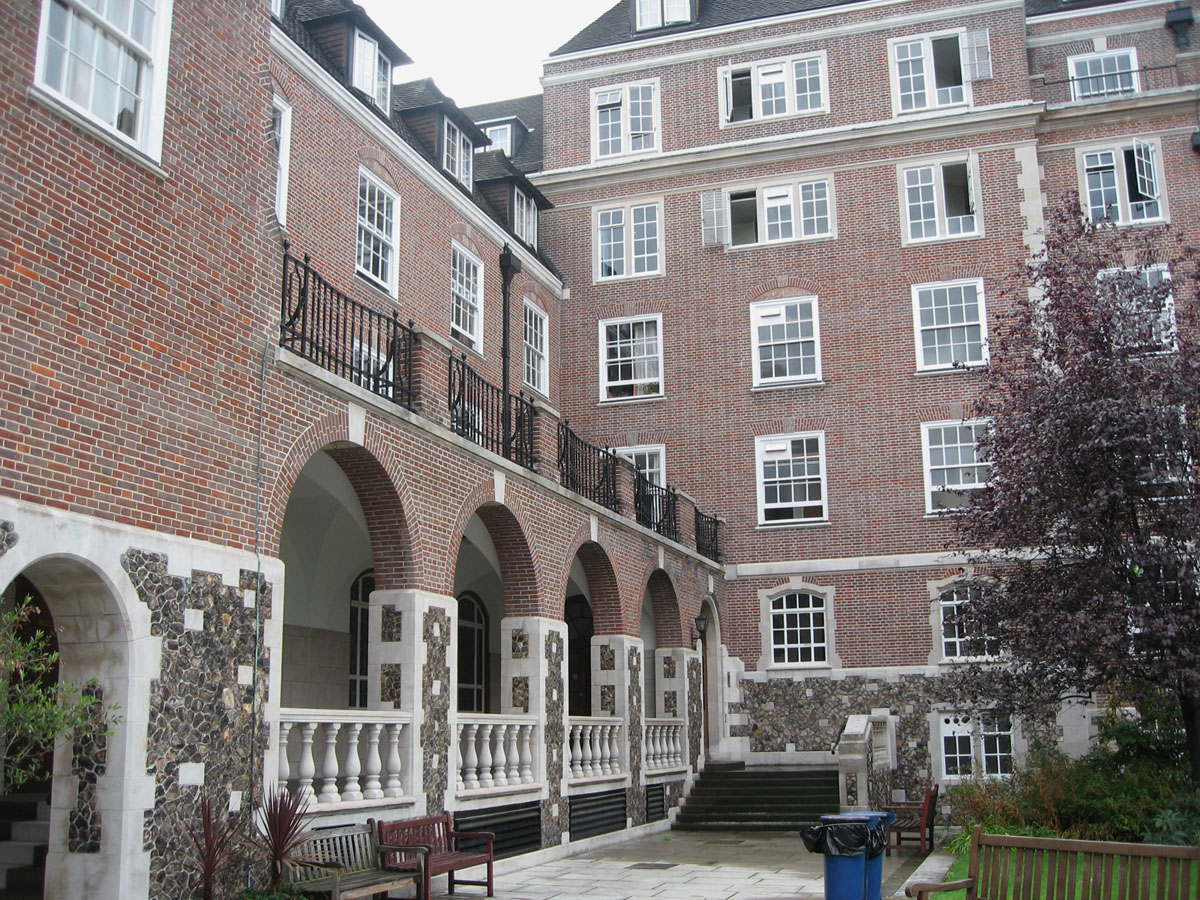
The second phase focused on London House, a Grade II listed building by Sir Herbert Baker. It comprised the refurbishment of 9 flats and 299 study bedrooms, as well as numerous heritage public spaces including the reception, great hall, library, chapel, dining hall and common rooms. Sensitive interventions were made to improve accessibility and modernise support facilities, including kitchens, laundry and bathrooms. Heritage finishes were restored following detailed forensic research and coordination with the Listed Building Officer.
One standout intervention was the upgrade of the Parson Library. Poor heating made the space underused in colder months. A bespoke heating solution was devised, integrating radiators discreetly into low-level bookcases by colour matching and insulating them into the perimeter, dramatically improving year-round usability.