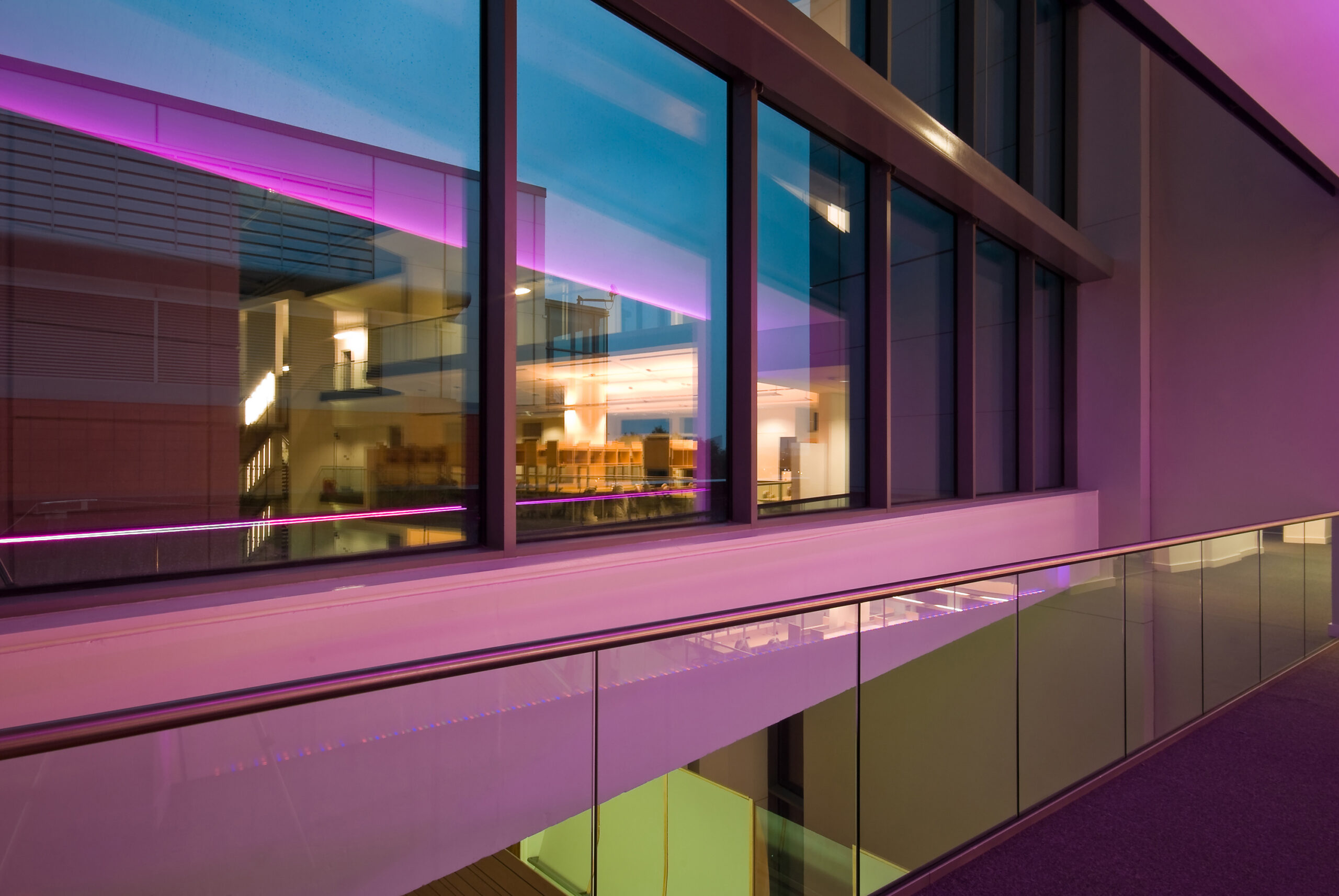
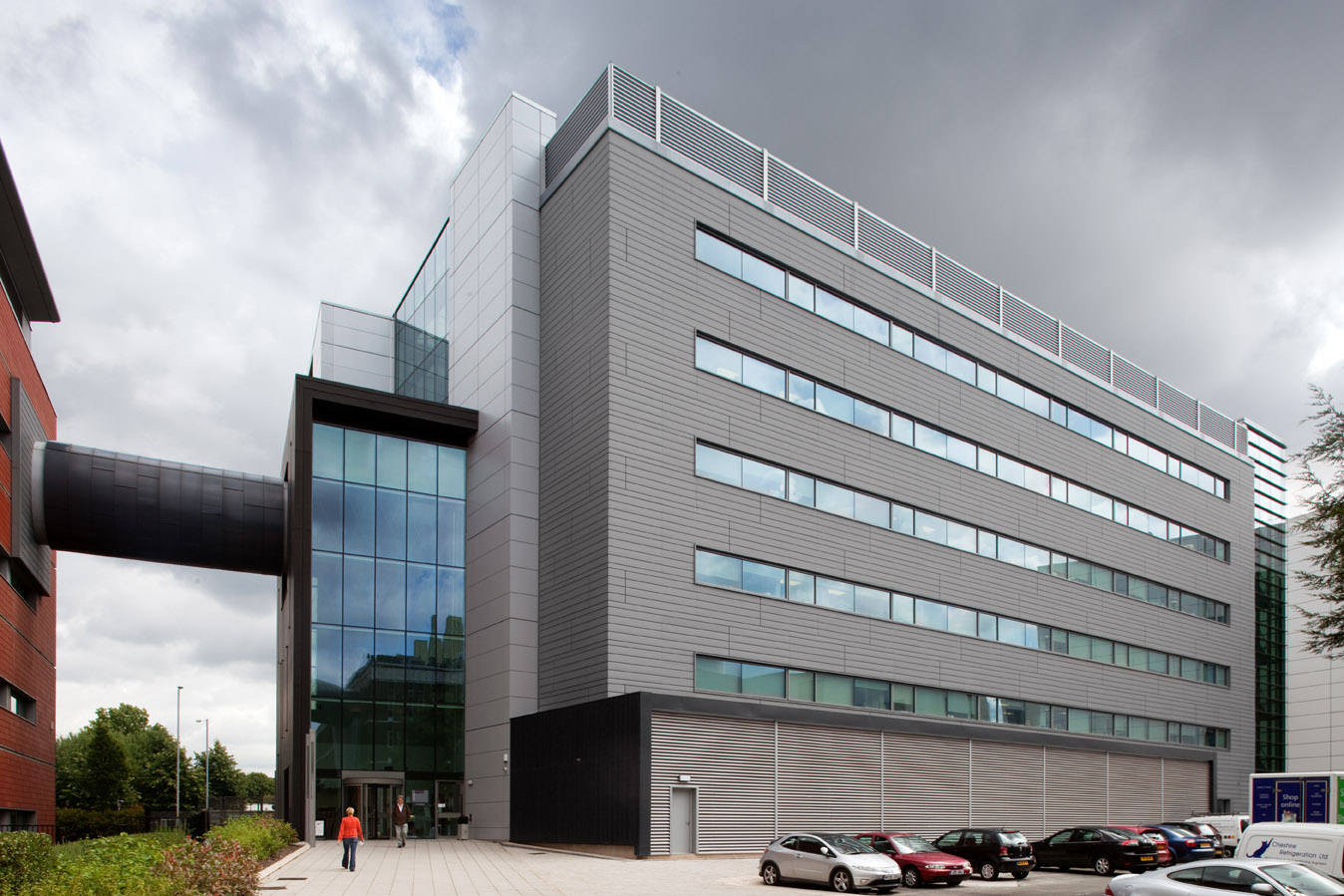
Named the AV Hill Building, after the former Nobel Prize winner, this project created a state-of-the-art research space for scientists from the university’s Faculty of Life Sciences and Faculty of Medical and Human Sciences. Additionally, the building integrates into the surrounding research buildings with the use of ‘bridge links’ at third floor level that run through the building as a feature within the atrium.
The six-storey building is designed around a central light-well to admit daylight deep into the plan of the building. Shared core laboratory facilities are located at ground floor level, including a freezer farm and histology suite. In addition to this, there is a large laboratory space for vibration sensitive equipment.
The upper levels, laboratory and non-laboratory spaces are separated by the five-storey light-well which provides the most efficient services solution. Shared ancillary and breakout areas are located adjacent to main circulation routes to promote interaction between researchers. The project integrates into the surrounding research buildings through the use of ‘bridge links’ at third floor level.
Maintaining a safe environment for researchers and minimising risks associated with hazardous materials and equipment was crucial to the development. This made comprehensive safety protocols – including proper ventilation, containment measures, and hazard management – essential.
Balancing the high energy demands of laboratory equipment with the need for sustainable practices was another significant challenge. This was achieved through energy-efficient equipment, optimising airflow, and implementing water recycling systems to reduce environmental impact and operational costs.